Episode Transcript
[00:00:00] Speaker A: The results are in. The Amerilife Marketing Mentors surveyed more than 160 healthcare agents about marketing, what they're doing, what they're not doing, and where they want to get better.
The responses we got were honest, and they painted a clear picture of where the biggest growth opportunities actually are today.
The problem isn't skill, and it's not motivation. Agents want to grow. They just don't have a clear path forward. But if you act on what we discussed today, you'll be putting yourself firmly in the minority of agents and best position to win. I'm David Belleville.
[00:00:30] Speaker B: And I'm Jo Barker.
[00:00:31] Speaker A: And this is the Amerilife Marketing Mentors podcast.
All right, Jo. After digging into the data, the picture is clear that there is nothing but opportunity abound for this audience.
[00:00:48] Speaker B: Absolutely. So I think one of the most interesting things, and we spoke to a lot of people, there were a ton of people out there, and how many people were willing to fill out our survey and tell us truly the issues they were having with marketing? I think one of the most astounding things that we saw is nearly 40% are saying that, hey, I don't have a formal marketing strategy. But even of the ones who said they did, they're just getting started. They were saying they're experimenting. They're trying to figure it out for the very first time. So it's not that people don't want to do it. We know they all want to learn marketing. We know that they are so many tactics that they want to deploy.
[00:01:21] Speaker A: Yeah.
[00:01:21] Speaker B: They just don't know how. They don't have the strategy behind it. And for me, it was really exciting to hear that because it was like, all right, well, we don't have a motivational problem. We simply just have a strategy problem, which is great.
[00:01:32] Speaker A: Yeah, it gives us a lot to work with because obviously there's a lot of components and elements to marketing. But the results of this survey allow us to pinpoint exactly where we can be of service with education, but also where our audience can focus their time so that they can grow and distance themselves from the competition. You mentioned marketing tactics. When you roll them all up strategically, you get a marketing system.
And of our respondents, 38% have no marketing strategy, meaning that they don't really have an end to end system to grow. Can you define that for our audience? What does a system look like?
[00:02:11] Speaker B: Well, I think a lot of people, what they're doing now is they're just deploying tactics. So they're posting on Facebook or they're. Or they're creating a video one off. There's no consistency in there. When you have an entire marketing strategy in place, you're able to take it from the very beginning of the awareness of making people aware of who you are. You're out there and you're being present to building that relationship with them and building that trust with them to where you eventually end up collecting some of their data. You may get their email addresses all the way through. And this whole time you're building trust with them and you're bringing them into your world, and then it's establishing the relationship with them and it's being that person that they trust. When they're ready to make a decision or they have questions, you're the person that they want to reach out to. So there's tactics that you deploy at every single level of that, but the entire strategy is getting your brand, your personal brand, your business brand getting out there. So when people are thinking about whatever product it is that you sell, that you are top of mind for your area and that you're popping up, you know when it is that they're searching
[00:03:07] Speaker A: for that, and that's the goal. And we'll dive into strategies that will allow for that. Today, when I think of operating without a marketing system, I think about like driving through super dense fog. Sure, the car is moving, but you might be driving extremely slow. You might not be able to see 10ft in front of you. So when you implement a marketing strategy, all of a sudden that fog lifts and as you describe, a journey becomes clear and you can start funneling your leads through that journey. And that's what we're talking about today.
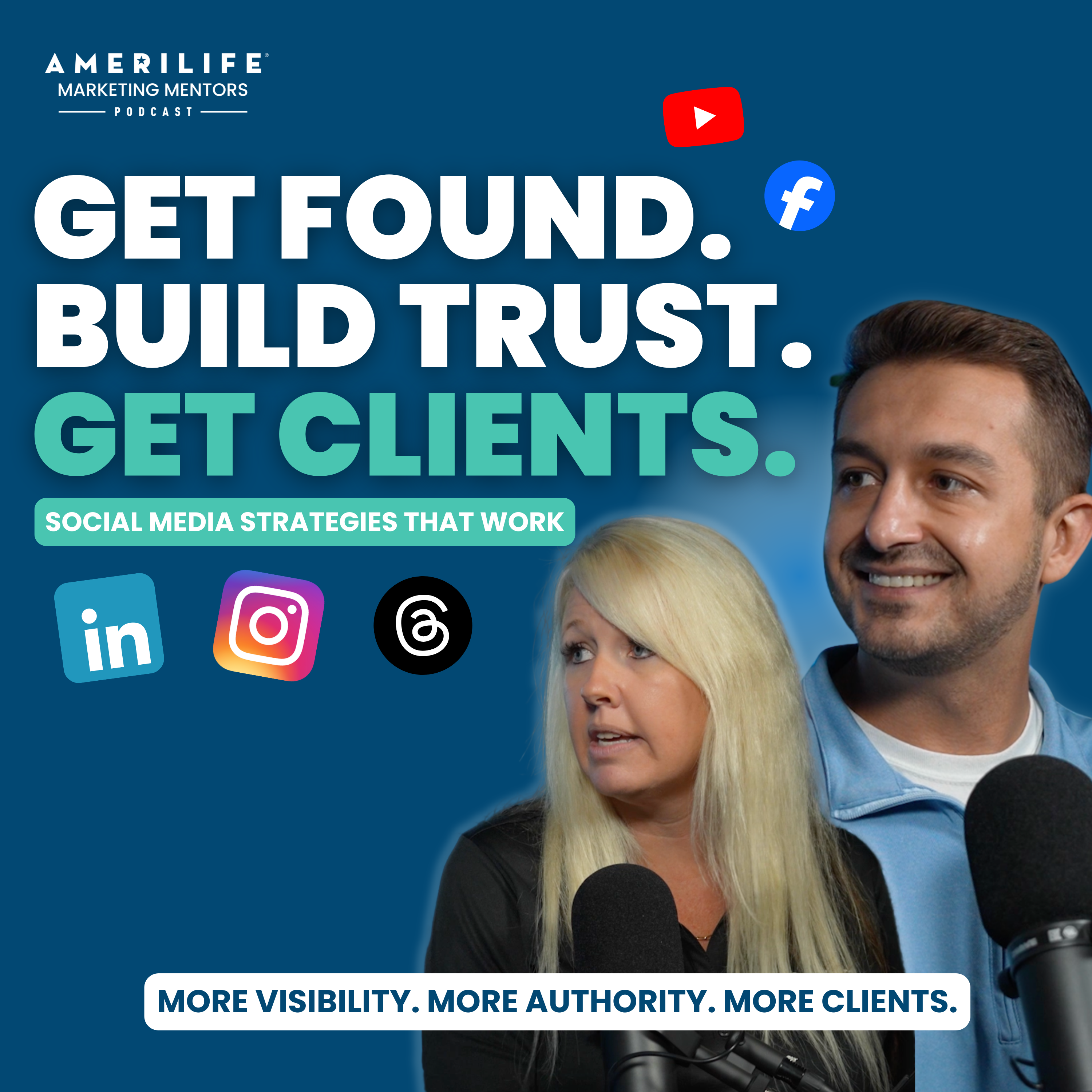
A tactic that came up that was significant was social media marketing.
One hundred and eight agents, respondents said that they use social media for their marketing, and 108 agents said that they want to learn mostly about how to leverage social media marketing. In other words, they're using social media, they're not sure if they're getting enough out of it. Where do we begin with that?
[00:04:03] Speaker B: So I think everybody knows you have to be on social media. The fact is, is it's really hard to create a behavior and it's really hard to try to get somebody to come to where you are. You might as well meet them where they're at. And on social media, our consumers and our audiences are spending hours a day there. So everyone knows you've got to meet them where they're at, you need to be where they are, and they're on social media. And I think that's where you're saying, yeah, everybody knows I need to be there. But then they're saying, but I don't really know if what I'm doing there is working or not. And that's really when that strategy comes into play. And that's when you really want to lean in heavy on the education, the providing of value and being consistent. I think we talk about it all the time of if you're out there just randomly posting things, you're gonna get random results. But if you put some strategy behind it and you're frequently giving the same messages, you're, you're, you're sharing the same value all the time, that's where you're gonna start seeing that resonation with your audience of where they're gonna start to. That frequency's hitting them and they're like, oh, okay, I got this. I know who you know, I know what they're talking about now.
[00:05:03] Speaker A: And consistency is key. But how do you position yourself to be able to be consistent on social media? There are a ton of platforms out there and depending on what your goals are, what your businesses are, you want to strategically decide what platforms to be on. Jo, for the health and wealth audiences, more times than not, those are going to be your older demographics, your 50 and up, 65 and up, et cetera.
So when we talk about social media, that audience is one of the first things we account for. And that means we're on Facebook and that means that we're on YouTube. And those are the big two. When we talk about our audience and social.
[00:05:44] Speaker B: It was interesting as we did this survey, we asked everybody, you know, what are, what platforms are you on and where are you creating content? And we saw, you know, Facebook was up there, which is great. That's absolutely the number one platform. Instagram came right behind it, which makes sense because it's tied into meta. So if you post on one, you might as well post on the other. The next one that came through was LinkedIn. The LinkedIn was a big one, which completely makes sense for especially the wealth affiliates knowing.
In my opinion, it's not as much of a long term behavior. You're not spending three hours a day on LinkedIn. It's a much quicker experience. Um, but we saw LinkedIn. Where it was surprising is we saw more people state that they were posting on TikTok than they were YouTube.
[00:06:22] Speaker A: Right.
[00:06:22] Speaker B: That was, that was surprising is that they were utilizing TikTok more than YouTube. And YouTube came in, I think fifth in our survey. The results that we did.
[00:06:30] Speaker A: Yeah, it was, it was pretty low on the totem pole. Other, the only other two platforms behind YouTube were X and Threads. Very two similar platforms and kind of makes sense, but for YouTube. I'm very curious to know what your take is on this. My belief is that YouTube, at least on its surface, if you don't have experience with it, comes across as intimidating. It's the big dog on campus. It has, you know, the most, excuse me, has the biggest audience. So the amount of eyeballs that could potentially see you on camera can feel intimidating. I just wonder if TikTok has a, a feeling of a lower barrier to entry and feels easier to jump into. If you're not familiar with making video, what are your thoughts?
[00:07:12] Speaker B: I think it is more casual and I think that helps people and I think, you know, one of the other stats that was in here is how they prefer to learn. And one of the things that they said is they prefer to learn, you know, watching short form video. And if you think about it, short form video is across all the channels. You don't. It's not just YouTube. So I think a lot of people are probably going where they're most familiar. So if you're a Facebook user, then you're probably creating those, those shorts or those stories on Facebook because it's just built in there and you're comfortable with the platform.
TikTok is a, is a little bit more, I think, casual and it doesn't feel as intimidating. When you go to YouTube that is a full video channel platform, you have to set it up, you have to prepare for it. That's not, that's not the case with TikTok. You can get on there, throw a video, you know, throw a picture of yourself, put a few things in your description and you can get making very quick videos and it's not nearly as intimidating, which I think is where you see people do that. And, and I think people feel with TikTok it's more social and doesn't have to be as content heavy. I think it's how they feel. Yeah, they don't have to commit YouTube. You feel like you have to commit because you've got subscribers that are, you know, that are going to your channel and you're watching that and you feel like you have to produce so much where I don't feel like people feel that way with TikTok.
[00:08:24] Speaker A: Yeah. YouTube is a legacy platform. It's been around forever. TikTok is much, much newer than. So that might also play a role into much of what you're saying. The through line here that we're talking about, whether it's TikTok or YouTube, is video. Video is the biggest opportunity to you right now. And if you are leveraging TikTok but not yet YouTube, then I recommend you take those TikTok videos and publish them on YouTube just as shorts.
[00:08:53] Speaker B: Absolutely.
[00:08:54] Speaker A: And just, just focus singularly on YouTube shorts and let that be your jumping off point. If you're just now starting to build a marketing get on YouTube and just cross post on TikTok, YouTube and Facebook with reels as well. Because we do know that YouTube is an important platform.
[00:09:14] Speaker B: When you're looking at your target audience, you have to look at where they're spending their time. So even though TikTok it might be a little bit easier when creating content for the first time and I think that's a part of it too, the tools on TikTok are so easy and so to create a video over there, it's not intimidating at all. You just follow the steps and it's very simple. Where YouTube is a bit more of a learning curve, but the thing everybody has to keep in mind is where is your target audience? Is your target audience audience? If you're especially going after that 50 or even that 65 plus, are they on TikTok or are they most likely on YouTube? We know they're on YouTube. They are not on TikTok as much.
So if you're looking to go where, where the majority of your audience is, that's why you definitely have to go after, after that YouTube channel. Especially when we know that's where the male 65 plus hangs out the most.
[00:09:54] Speaker A: Sure. And to your point too, if you're gonna work out the kinks, if you're gonna make mistakes, TikTok is a great platform for that.
[00:10:01] Speaker B: Yeah.
[00:10:02] Speaker A: So get your feet wet with TikTok scale from there. TikTok is also a worthy platform for recruitment purposes as well.
[00:10:09] Speaker B: And I would say if you're getting started on shorts, don't, don't even, don't worry as much about it has to be on YouTube. Start where you're comfortable. We know the majority of our agents that were that were surveyed all said that they're on Facebook. Start on Facebook, do a 60 second video and get it up on Facebook and just get comfortable with it and eventually you'll build up to where you have enough content where you can start your YouTube channel.
[00:10:31] Speaker A: That's a great point and I'm glad that you pointed that out. When we talk about being consistent on social media, that is the most important part, you need to be posting where you are comfortable and then scale from there. Once you have a routine and a flow down, we can revisit social media. But I want to make sure that we carve out time for this next topic, which is email marketing.
[00:10:52] Speaker B: It's my favorite.
[00:10:52] Speaker A: I know it is your favorite and for good reason. To you, there's many, many ways that you can engage with your audience, but perhaps the most important reason is that it's among the most highest ROI of any marketing channel available to you. Can you explain for our audience what gets you so excited and jazzed about email marketing? Because you light up every time you do.
[00:11:12] Speaker B: I do. I? Absolutely. To me, email marketing is by far my favorite channel. It always has been.
It is the highest ROI you will get out of any of the marketing channels. So you have to think about it. You'd spend all that time and all that effort building your email list. You're out there doing lead generation. You're collecting information at events, you're constantly building your data. And then you have a platform at no cost that you can email all of these people that didn't convert and you can nurture them and you can re engage them and you can provide them value on a weekly or monthly basis at no cost. That is incredible. They gave you a way to access them and so many people underutilize that channel. And I think as long as everybody keeps in mind that as long as you provide value, people are going to want to receive that. So if you have their email and they're not a client of yours, it is the best channel to reengage them and to again come over the top of just being that thought leader and being that that piece of extra value and you're just giving it to them in their mailbox and you're not asking for anything in return. And it's amazing how many people don't take advantage of that opportunity.
[00:12:18] Speaker A: It can be extremely rewarding. I am curious, Jo, because the data here is fascinating.
More agents that we spoke to want to learn more about email marketing than are actually putting email marketing into practice. That tells me that there's an appetite to grow into this channel and leverage all of the benefits. But perhaps they just don't know where to start and that involves picking a platform.
If you don't have a CRM, considering, highly considering a CRM to be able to execute on your email strategy. But what do you find is the, you know, the biggest objection when it comes to not having an email strategy?
[00:12:59] Speaker B: In my Opinion. I think it's just people aren't sure what to say, and they're not. They don't know the balance. So they don't want to email too much because they don't want to bother people. And they. If they're sending something, you know, say it's a monthly newsletter, then they feel like, oh, I don't have enough information for this month. And I honestly, I think people overthink it. It can be as simple as every week or every other week of just watching the news. What is valuable to your current audience. It doesn't have to be siloed into your product. It could be anything that's hitting the news, any type of information. So an example is, as we do marketing, we follow digital marketing, we follow all of the channels very closely. Every single week, we put out an update to our audiences saying, hey, this is just what's in the news this week with marketing, yeah, we're not selling anything. We're not trying to pitch anything. We're just trying to be of value to our audience and saying, this is what you may want to know. We found it interesting. And this is what's coming up. And you may want to know that. And it's those type of touch points that I think just make it super easy for, you know, for agents and advisors. But you're right, you have to have a CRM. The reason being is I think a lot of mistakes that agents make is when they start their email tactics, they talk to everybody the same. And so. And think about that. Think about an email you've ever received from somebody and say you were already a client or you already purchased from them, and then you're getting an email to purchase, you kind of get upset and you're like, well, why are you emailing me? I just bought that. And you kind of. You start to lose trust because you're like, you don't know me. That's where agents have to be a little careful, is you don't want to treat everybody the same. You want to make sure that you know who your clients are, you know who the people that you're currently having conversations with remove them from it. You want to make sure, you know, if it's a nurture campaign, that it truly is nurturing a group that you don't have a relationship with. And I think that's where it gets a little intimidating is people want to group them when where taking that extra time and effort to segment them into where they truly are with the relationship with you is gonna go a Long way. Even though it's a little bit of work upfront to get it organized.
[00:14:49] Speaker A: Right. And your objections for each of those. Excuse me. Your objectives for each of those audiences should be different.
[00:14:55] Speaker B: Absolutely.
[00:14:55] Speaker A: Depending on where they are in their journey and relationship with you as well. And that goes into time management. If you're wasting your time introducing yourselves to an audience that you've been working with for two years, then you know that's time not well spent. And you could be dedicating your resources and time much better to that more seasoned, warmer audience. That's great advice, Jo. And before we move further, because we're going to get into AI next, we've talked about social media and we've talked about email marketing. Those are two tactics when we're talking about an overall marketing system.
So I just want to make sure to call that out, that we're starting in some ways to see that journey through our conversations. You can find a business on Facebook and through Facebook, garner their email, and then that paints the picture of what we're trying to talk about. And AI can help you with all of this, and it can really expedite the process, because one of the biggest challenges, I think, for our audience is finding the time to dedicate to marketing. But if you have a system that you can in some ways just repeat month after month, it just gets baked into your routine and becomes easier so quickly. Jo, can you talk a little bit to that time management objection that we often hear? And how can AI help?
[00:16:18] Speaker B: Well, I can help a lot. One of the interesting things I think was one of the stats that we've received is 61% of agents are not using AI at all in their marketing. I was kind of surprised by that. I was expecting, you know, AI has been out now for a couple of years. I was fully expecting that to be much lower than what it was.
And to see that 61% are saying, hey, we're not using it at all, that means to me, there's a lot of opportunity out there.
I think when you're looking at how to utilize AI for the first time, you really have to pick a space or an area that is the most, I guess, the biggest hurdle for you. So if coming up with content for social media is a hurdle and it feels like just stress and it's tedious and you don't want to do it, that's when you should use AI. If it's coming up with. With content for an email, that's when you should use AI. It really is looking at that System. I think one of the things we hear the most is I don't know what to post. I know I should post, but I don't know what the post. Use AI, use it for inspiration. You don't want to copy and paste what it's saying, but use it for inspiration. So write down your marketing workflow, whatever that may be, and whatever point that is where you realize that, hey, I procrastinate when I get here. It's probably because you don't want to do it. Yeah, that's when you should look at for an AI tool that might be able to help you with that. And I really do think a lot of it is just ideas and coming up with inspiration. That is exactly what you should use AI for. And with AI tools, you can tell them exactly who you are, exactly who your audience is, exactly what platform you're using, and exactly what goals you want. And it will help you come up with those content ideas. And then all you have to do is actually post on it and make sure that you're following through and getting that consistency going.
[00:17:50] Speaker A: 29% of respondents have low confidence in their ability to create content, and 43% have just moderate confidence in creating content.
So the vast majority of those that we talked to have confidence issues with being able to develop content that will resonate, that will convert, that will make an impact on their business.
That is also where AI comes into play. You just said it all of the fantastic ways that you can garner content ideas. This is a starting point. And if this is where you're getting hung up, then leverage the use of AI to generate those ideas. One pitfall that we always try to make sure that our audience is aware of, though, is AI will generate very similar results depending on who's prompting. And if you think about all the competition you have, if they're using AI for the same reasons, then everybody starts to sound the same. So that is what you mean by don't just copy and paste. You need to ensure that you're putting your own voice, your own perspective and your own personality behind it. That is how you leverage AI with these content ideas without blending in with everybody else.
[00:19:02] Speaker B: Yeah, it's bringing your personal brand. So, you know, you and I are out talking about marketing all of the time, and the only thing that sets us apart from the next person down the street that's talking about marketing is the way that we talk about it. It's. It's the stories we bring behind it, it's the way that we present it, it's the way that, you know, the way that we are able to explain it, that set us apart. And again, I think a lot of people when they're thinking about social media is. It's almost intimidating and they overthink it too much. That's where I can help you come up with those ideas. But it is vital to take those ideas and then to put your spin on it, put your opinion on it. Don't be afraid to put yourself out there. Are you going to connect with everybody? No, you don't want to, though. You want to connect with the people that, you know that really do, you know, have those same things in common with you. You don't need to connect with everybody. And so I think, you know, if people keep that in mind, and I love knowing that so many people want to be on social media and they want to learn more about AI and they want to do more. It's. You just have to get started. Pick one channel, pick one AI tool, pick one focus and just go and just get started with it.
[00:20:02] Speaker A: When I think about reasons why people, especially now, are still hesitant to use AI, it's similar than to a lot of the reasons why people won't start with marketing. And it's because they just don't know where to begin or they find it too intimidating and they get overwhelmed and they don't know where to start. I would recommend finding a LLM or chat AI chat platform that you like most and just have a conversation with it. That's the very first thing. If you've never had used AI before, because what you want to do is ultimately train your AI to talk like you, sound like you, write like you. You want it to become a little assistant that you can take with throughout your workday. When we talk about training our AI, Jo, what are we talking about, though?
[00:20:49] Speaker B: Well, first I'll go back to, to utilizing AI. We're all utilizing AI. We have been for years. And so for anybody that's like, hey, I'm afraid of utilizing AI, well, guess what? You've been using it, you know, every single time you drive and it tells you to take a right because of traffic, that's AI doing that. Every fraud detection you ever got from your bank saying, hey, this doesn't look like you. That's AI detecting that when you're watching movies and it says, hey, this one's also popular for people that watch this one, that's all AI. So I think it's just realizing we've used it all along. We're just now using it to make us more efficient, not make our lives easier as we're, you know, as we're driving or watching TV and we're trying to figure out that next product.
So I think that's important for everybody to realize is it's not scary. It's just now it's a time to use that opportunity to make you more efficient and make you that much better. So I think when you're looking at the AI platforms, it really is just getting started with it. The Most popular is ChatGPT. We know this. It showed up in the survey. It by far was the most popular LLM and it's because it was the first that really came out to everybody that has the free versions to it. I think we've shared before. It took Google seven years to get 100 million users. It took chat two months to get that same exact amount of users. We know it's very popular. I think the whole thing that you have to realize though, it's, it's not a search. You're not going there and typing in a search like you would Google. You're having a conversation and it needs to be a actual conversation. I was at an event recently and I asked the room who knew what prompting was and it was like two people in the entire room knew what prompting was. And that's what you do on ChatGPT is you prompt it to give you a response. And it was a good reminder for any industry that you're in is just because we use that terminology doesn't mean people understand that terminology. So as you're talking with ChatGPT or these AI tools, keep that in mind and tell them, you know, explain this at a third or fourth grade level. Make sure not to use industry jargon, make sure you don't use those words and break it down and make it very simple. Start with ChatGPT. You'll get really comfortable, really quick and just know it's a conversation. It's not a here's a search and I'm done.
[00:22:48] Speaker A: When you are starting to use ChatGPT. Copilot Claude Gemini Whichever you do end up using, there are certain settings that you can incorporate as well. We have a great podcast on that, breaking it all down. I highly recommend we can link down to it in the description as well. But there are settings and then there's also elements of a prompt that we probably should at least share today because if people aren't even sure what the word means, then the formula of a prompt might escape them as well. There are certain elements that puts together a Prompt that you can then save and always reuse. Anytime that you need a Facebook idea or an email subject line, Jo, we often say we need to give it a role, a tone, a goal, a format, a platform, a target audience. Is there anything I'm missing?
[00:23:41] Speaker B: No, I think you got it. Actually, I'm quite impressed.
[00:23:43] Speaker A: So if you can incorporate those into every single prompt, then you are prompting with best practices. Again, reach out to the Amerilife marketing mentors if you want to dive in more into that conversation. But is there anything else on AI that we should touch on before we move forward? Jo? No.
[00:23:59] Speaker B: I mean, I don't think it's going away. I mean, so I think every, you know, we just have to realize that it's. This tool is going to keep going and the shiny new tool is going to be out every single week. So just pick a tool, start utilizing it, start seeing how it makes you more efficient, but don't always just go after that next new thing. It can become very overwhelming utilizing AI because you can have so many tools running. So it really is just keeping it simple and looking at your workflow of what makes you, what would make you more efficient if you had help. Treat it as your virtual assistant. I think that's what I try to tell everybody. Treat it like your true assistant. You would never give somebody that you just hired your phone and say, here, go post on social for me because it's not going to sound like you. That's what ChatGPT does. It gives you responses that don't sound like you. So don't ever just take it and go with it. You've. It's got to know who you are. You have to train it, you have to teach it things about you. And that's where the more you use it, the better it's going to get over time. But you've just got to start ask
[00:24:52] Speaker A: AI to interview you. Yeah, whatever. You end up on that. That's been one of my favorite tips that we share.
I've done it as well. It provides your new assistant an opportunity to get to know you. And Jo, you taught me this, but I do it exclusively now. I only use talk to text or voice mode. Not because I don't want to be typing or texting, but because I want AI to know how I talk, what my rhythm is, what my typical vocabulary is. That way it's not producing some sort of academic or article when really all I need is a Facebook post. So, you know, that's also a great way to do what we're Talking about, which is train your AI, Jo. Speaking of AI, it's just nothing but opportunity. And that's where I want to take this conversation next. We know that our audience wants to leverage marketing. They want to get better at it and use it to grow their business. But. But it's for everything that we just said, you know, whether it's time or overwhelm or just not knowing where to start, they have challenges. In fact, on a scale 1 to 10, our respondents measured 7.3 in interest in improving their marketing skills. And that's not like, that's not a passive number. That's a very big majority. So, Jo, what do you think is the biggest upside?
Everything that we're talking about, like, what's the outcome that agents can look forward to if they start to implement some of these systems we're talking about?
[00:26:26] Speaker B: I think it's building their pipeline. So that's really what you want to do as an agent. You want to strategically look at it and answer all of the basic questions. So if I'm an agent and I say I'm in the Clearwater area, how do I reach as many consumers as I can in the Clearwater area? So now I know the geography that I want to own.
I know what digital channels. So in order to be online, that's where everybody is. Whether it's they're on their LLM, they're searching on Google, which still the majority of people search on Google. Whether it's on social media, you want to have a presence there. So then it's okay. I know I'm in Clearwater. I need a website, I need my social media accounts. I need to make sure that I'm popping up on Google and I have a Google my business. If I have a storefront, you start building it all in there to understand if people are looking for the product that I sell, how do I make sure that I show up there? And even if they're not looking for it now, how do I meet them on social? Social to where when they are ready, they think of me first. That's when you start building in strategy and you start looking at all those touch points. The more you know your target audience, the more you can niche down. We always say the niches is in the riches or the riches is in the niches. Something like that. Then we know, you know, we know who we're talking to. So every time that I create content, I have a Persona that I use. I think I call her Sally all the time. So every. Every piece of content that I Make, Whether it's on LinkedIn, whether it's on Facebook, a video on YouTube, I always just picture I'm talking to Sally. That's it. I'm trying to help Sally and as long as I help Sally, there's probably a thousand more Sally's out there that I'm probably helping. But I'm just, it's, it's not as intimidating. I'm just trying to help my one person.
[00:27:55] Speaker A: That's fantastic advice.
One of the greatest areas of opportunity, when we're talking about what the end goals are and what, what the outcomes are for our audience, the quick one of the quickest way to get there, we started the conversation with it, we may as well end it with it is short form video. And when you talk about getting discovered, when you talk about your audience finding you, there perhaps is no greater opportunity than short form video.
[00:28:23] Speaker B: I think if you go over to our YouTube, it's a perfect example. So go to the AmericanLife Marketing Mentors, YouTube. It's only been around for a couple of months. If you look at our long form video and then you look at our short form video, our short form video is dominant. We get so many views on that short form content because we know people are quick. They want to go, they want to learn and they want to see what it is that we're saying and they don't want to spend 15 minutes having to sit and listen to it. This podcast that we're doing right now is going to be turned into 30 shorts. And we know those 30 shorts are going to drive back to this podcast, but we know those are going to get consumed more than the overall podcast.
That's how people like to learn more and more. You know, you think about the patience we used to have back in the 90s when we were doing dollop and waiting for the Internet to turn on. Basically now we don't want to wait two seconds for a website to, to load before we're bouncing off of that site. Time is of the essence. We all want to learn quickly. That's where those short form videos are key. Now we just have to figure out everyone knows that's how they like to consume. We've got to get everybody to a point where they're comfortable producing in that same format, knowing that's how people like to learn.
[00:29:23] Speaker A: And 71% of our respondents said that that is exactly how they like to learn.
When we're talking about all of this, the reason why we want to drive this home, other than just being in the data is that if you do take that leap of faith, if you capitalize on this opportunity in front of you by getting in front of the camera and capturing short form video, you are cementing yourself firmly in the minority of agents that are taking that opportunity. So you're giving yourself the best chance at differentiating yourself from the competition and being that go to authority in the market. Because in the years that I've been using TikTok YouTube shorts reels, I myself have made connections with certain creators and that can be you as well if you become somebody that can do this consistently. It's just there's a gold mine waiting out there. Jo, there were so many amazing insights. This definitely won't be the last time we we look for more of this valuable data from our audience and we want to hear from you because not only does it help us decide what content is most important to you, but it also gives you an opportunity to have a say. So Jo, in our final moments, do you have any final thoughts?
[00:30:40] Speaker B: When you think about marketing strategy overall, it can seem like it's overwhelming. We totally get that. It's not what you do day to day. Day to day you're out there selling. We completely understand that. That's why Amer Life Marketing Mentors is here is we're trying to make it as digestible as we can. We have a LMS coming out where it's to teach you from the very beginning of strategy all the way through the tactics all the way through to the follow through and getting your customers to become advocates for you. We're building all of that out. So stay tuned with us if you need help. That's when you reach out to us. But really what it comes down to is you've got to build your personal brands. Especially as AI comes more into play. Trust is going to become a factor and people trust people and you are the perfect person for them to trust. So just don't be afraid to put yourself out there. Start creating content if you need help. That's why we're here to help you.
[00:31:26] Speaker A: Honestly Jo, I think that's a great note for us to end on.
[00:31:28] Speaker B: Well, thank you and thank you everybody for tuning in today. Keep in mind that LMS is coming. I'm Jo Barker, this is David Belleville and until next time, this is Amerilife Marketing Mentors.