Episode Transcript
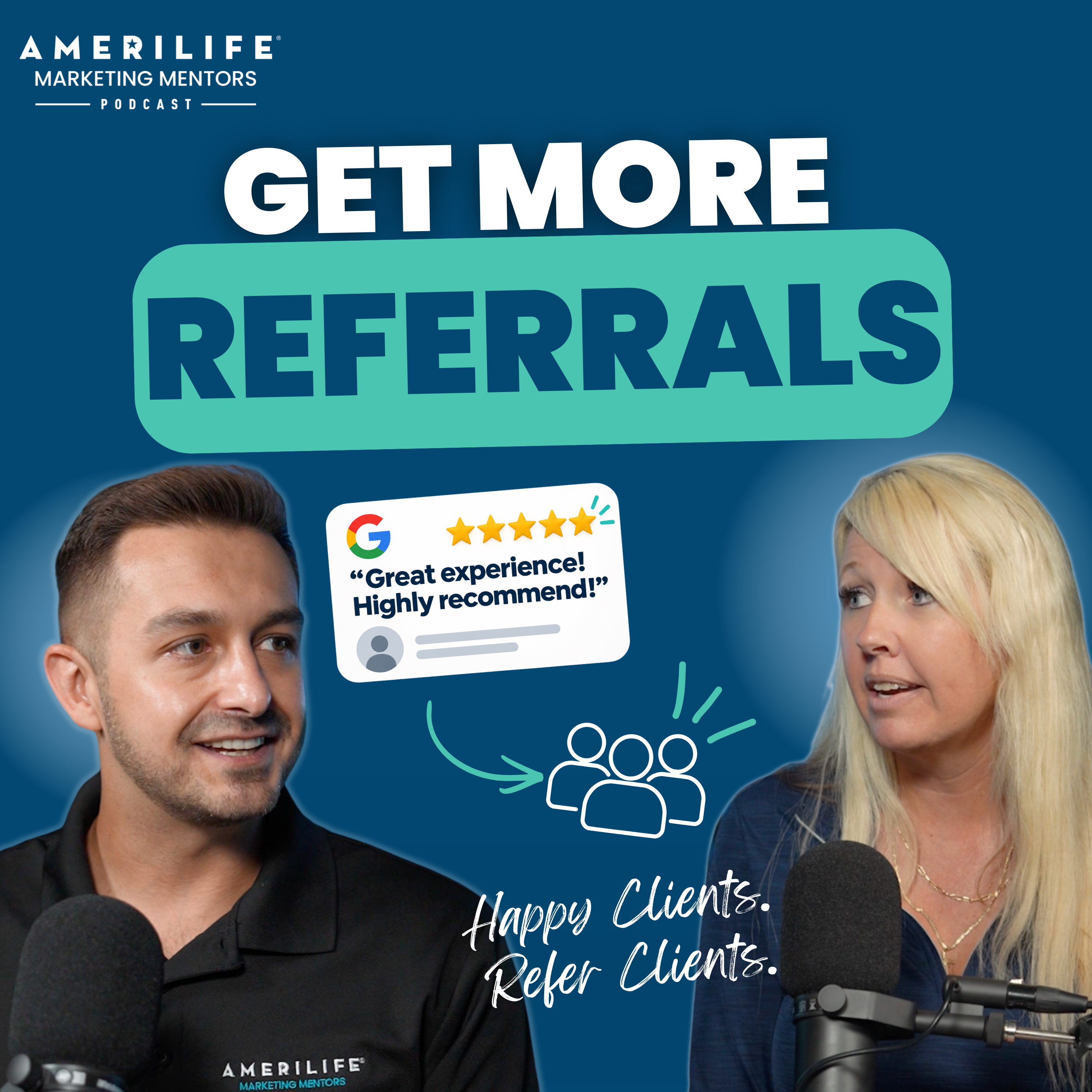
[00:00:00] Speaker A: I recently read it was like over 90% of people have said that they use reviews to make decisions of whether they should move forward. Think about it. That one review could have hundreds of views on it, and it can have a huge impact and it can scale.
[00:00:11] Speaker B: Sometimes the most simplest way to get a reviewer referral is just ask, how can you extend the shelf life of some of these reviews? Just because it's posted on Google doesn't mean it can't live elsewhere. That is content that you can leverage.
Clients are trusting insurance agents and financial advisors with some of the most important decisions they'll ever face. To make those decisions a little easier, people will often turn to those that they already trust or sometimes those that they have no idea who they even are. Jo, we're talking about reviews and referrals. What makes them so valuable to an insurance agent, especially as AEP approaches?
[00:00:49] Speaker A: Well, I think you just said it. You know, it's people that, that they never even met, they're trusting the opinions of. So I recently read it was like over 90% of people have said that they use reviews to make. Make decisions of whether they should move forward. It's critical. Everybody wants that social proof. Everybody wants to know, oh, what do other people think? Before you buy products, before you work with people, you know, before you go to a car dealership, whatever it is, you're most likely looking up the reviews to understand what other people experienced. And it's, it's a legitimate way for people to make that decision of. All right, well, these people had a great, had a great experience. Then I should most likely have the same.
[00:01:23] Speaker B: And of course, any entrepreneur or marketer is going to speak highly and positively of themselves.
[00:01:27] Speaker A: Of course, we're the boss.
[00:01:28] Speaker B: But that's where the added benefit of a reviewer referral comes in. Because you're not just relying on the words of somebody else. You're relying on someone that you trust who already had that positive experience.
So can you compare what messaging looks like from us as marketers versus a recommendation from a client?
[00:01:46] Speaker A: Yeah, if we're out there and we're saying, hey, I am the number one digital marketer out there, and, and I am the best out there about, you know, talking about AI or talking about marketing strategy in this industry. Okay, yeah, that's great. I'm expected to say that because I'm, you know, it's my job.
But if we had our partners or our affiliates or agents and advisors who go out there and they're like, hey, I want to, you know, I attended your webinar or I attended your podcast or I was at somewhere where you were, and it was very informative and it really helped me. And by the way, my leads increase from 5 in a typical season all the way up to 25. And I didn't put any paid ads. It was all organic and it was all growth because of what you taught me. That is a valid, you know, that's a story right there. And that's something where, you know, you have somebody who's advocating for you because you did something to help them. It is a completely different thing than going out there and just being like, yep, this is what I did, this is who I am. So, you know, it's, it's trust and that's what you're trying to build. If you're helping people, it shouldn't be that hard to ask them to give you a review.
[00:02:42] Speaker B: When it comes to a busy season like aep, of course, agents are looking for quick ways to build trust, but the consumer is too. They have important decisions to make and they want to know that they're picking the right person to help them make those decisions.
So oftentimes though, the problems that they're faced with are, can be overwhelming or it can just be really hard to understand and navigate through the worlds that, that we're in every single day. Reviews and referrals help, but they do do two separate jobs. So how should agents think about the difference between reviews and referrals?
[00:03:15] Speaker A: Yeah, a review is, is when you ask someone to go to either your website, your Google my business, your Facebook, your, your social media, and you ask them to leave your review. Now think about it, that one review of views on it, so all the people after them can come and see that one review that was left. And it can, and it can have a huge impact and it can scale where referrals is a little bit different. A referral is, is a one on one transaction and it's saying, hey, you helped me, by the way, I have a friend David, and I really think you could help David too. And that's the referral. So it's more of that one for one. Now don't get me wrong, the review still helps the referral because most likely when the referral hears about you, they're going to be like, oh, well, let me go see, you know, let me go see who this person is. And then they go check your reviews. So they go hand in hand together and they compliment each other. But they really are two completely different, you know, strategies that both should be deployed.
[00:04:04] Speaker B: I think about putting myself in that consumer's shoes. If you rec. If you recommended someone to me and then I go to Google to do my own research and see just a slew of recent positive reviews, I'm already like, one step in the door at that point.
[00:04:19] Speaker A: Oh, 100%. You had a friend. Yeah. You had a friend recommend it, and now you look and you see all these people that you don't even know recommend them. It builds that much more confidence in you. Of like, all right, well, I feel like this is a good decision. It helps you make that decision. So it really is critical. And I don't even think people realize how one review scales and how many people see it, because it's not like they're hitting like, on it or that, you know, that you're seeing the impressions of it, but that many people, you know, it has a huge effect.
[00:04:44] Speaker B: Yeah. And what also, what it does is it can shorten that sales cycle. Because if I am, if, like I said, I've already got my foot in the door with a referral and, you know, a slew of Google reviews that are all saying similar things, then I am coming with more trust than I would if I just did a Google search and clicked on the first name that came up. So why does having that established trust become so important, especially during enrollment season?
[00:05:13] Speaker A: Well, because you're so busy selling. I mean, during enrollment season, we, we have a finite amount of time to sell. You know, when you're talking about AEP, and we know that our dates are October 15th to December 7th, and that's the dates that we've got to get all this done. The last thing we need to be doing is pitching ourselves to anybody. We need to be selling. And so the more that we can have our online presence and our reviews and people sending us referrals, the better off we're going to be. Because now we're not spending that time that we don't have to pitch and try to explain to people why they should be working with you.
[00:05:44] Speaker B: Anytime that you can save time in this industry is valuable.
[00:05:48] Speaker A: Absolutely. Yeah. We're selling. We should be selling, not pitch.
[00:05:51] Speaker B: So, and, and, and, but that gives credence to the fact that the it. The journey doesn't stop after the sale. And that's what we're talking about today. If, if I have a happy client and, and I was able to, to convert, then they can become an advocate for me and my brand. And that's exactly what we're talking about today. But Jo, it's not very often that satisfied clients leave a situation thinking, I can't wait to go home and, and leave a review. Or I'm calling, I'm calling everyone in my family to refer them. Sometimes they need an extra nudge. So sometimes the most simplest way to get a reviewer referral is just to simply ask. So, Jo, what are some of the best moments for an agent to ask for that reviewer referral?
[00:06:35] Speaker A: I think one of the best moments is when you get a compliment. So when somebody's like, oh my gosh, you helped me so much. That is the best time to ask for a review and be like, oh, I'm so glad that I was able to help you. You know, there's probably other people that I could be out there helping. Would you leaving me a review and, and then you're not saying, hey, do me a favor. You're saying, hey, there's probably other people in your. In, you know, that are in the same situation that you were that I could possibly help, you know, can you. Do you mind taking two seconds so that way those people find me also and can understand the experience that you had. That is the perfect time is when you get that compliment also, you know, at the end of the, the close. So whenever it is that that policy is closed, whenever it feels natural, you know, is when you ask and the easier you can make it for them, give them a link. You can ask them like, hey, do you have Gmail? You probably already know because you just worked with them. If they don't have a Gmail, hey, here's my Facebook can, you know, do you mind just taking two seconds and going and leaving this here for the next person that may be wondering if I'm a good partner for them?
[00:07:32] Speaker B: What about referrals? How can an agent get into the mindset and maybe even implement a system where referrals start coming in consistently?
[00:07:40] Speaker A: To me, that's easy in email. So it's the same type of thing though, is when, when you get that compliment, it's just asking them, hey, do you mind giving me my referral also? Hey, do you. To know anybody that may be in a similar situation that you are or could be approaching, you know, Medicare or you know, or is again in a similar situation as you, would you mind recommending me to them? Yeah, it's, it's that simple. It's just being, being aware of the, the process that you're in and realizing now's the time. As soon as you get that compliment, as soon as you hear a compliment, we'll say thank you. Make sure. You say thank you and then your manners. Yeah, exactly. And then pivot right to it and be like, hey, I'm so glad I was able to help you. Thank you so much for that compliment. I really do think there may be other people that I could help. Would, you know, would you mind taking two minutes and just leave me that review or do you mind sharing my card? Here's some cards. Do you mind sharing it with a few of your friends? The easier you can make it for the person because they're not out there thinking, oh my gosh, I need to go promote this person. They're not thinking that, but the easier you can make it for them to go promote you and to be an advocate for you and then the better odds are that they are.
[00:08:37] Speaker B: That's great advice and this is a bit of Psychology 101, but people are more prone to want to help people who helped them.
[00:08:43] Speaker A: Oh, absolutely.
[00:08:44] Speaker B: If you do me a favor, I more than I am more likely to then return that favor. And that's the same logic here. You just provided a positive experience.
They've acknowledged that perfect window of opportunity to ask for that review during a high volume period. Jo, like aep, how can agents stay intentional about this process? Because I can imagine how easy it is in the thick of AEP to forget about these things. So how can they start to bake this into their regular routine?
[00:09:15] Speaker A: I think, you know, if you're meeting with, with somebody in person, just having something on your desk that has a QR code that goes to your reviews is an easy way to reference it, you know, before they leave and just say, hey, do you mind? You could also have cards. If you're meeting with them in person, you can hand them cards that easily have the, you know, the QR codes or the links or to where they can share your card as a referral. Other ways to do it is to build it into your email marketing platform. So if you already have email marketing drip campaigns set up for, for once a policy is submitted, whatever it is, then you just build it in there and say, hey, great news, wanted to let you know that the policy was submitted. Also if you have five minutes, you know, if you have five minutes, if you wouldn't mind going here and leaving me a review, you can easily build it into those email drip campaigns also making sure that you, you know, and I think that's where a lot of people get lost is, you know, if don't just say go, leave me a review, because then you're expecting them to go out there and figure out how do I leave your review? Yeah. So any way that you can provide them a link or make it very very for them, you're going to have much better odds that they're actually going to complete it.
[00:10:15] Speaker B: Yeah, any friction you can ever remove is, is going to be beneficial. And Jo, getting the recommendation is only part of the opportunity. What an agent does with that trust afterward can often determine whether it keeps working for them. So once an agent does start leaving reviews, what should they be doing with them? What's that process like?
[00:10:38] Speaker A: Well, you should be responding to them immediately. So as soon as they leave your review, think about it. They just took time out of their day to go le you a review because they were that happy with your results. Take a few minutes to respond to them and make it sincere. Thank you so much for leaving me this review. It was great to work with you, you know, and you can put in, you know, if there's something that's not too personal, you can put something about the experience in there. That is all, you know, that's all positive things that you should be doing. Also, you can take those reviews, you can screenshot them and you can share them on social media. Hey, another proud customer, you know, another happy customer. This is who I helped, you know, here's, you know how I did in their own words. And it's a good promotional for your social media campaigns also.
[00:11:16] Speaker B: I was just going to ask about that. Jo, how can you extend the shelf life of some of these reviews? Because just because it's posted on Google doesn't mean it can't live elsewhere. That is, that is content that you can leverage and distribute that message even farther.
And so email social media, your website is a great place to embed reviews
[00:11:36] Speaker A: or feature your email signature. You can put them at the bottom and you can change them out. There's so many different ways that you can util that great content.
Your website is a great area where you can put up a slider that just shows the different reviews that you've received.
Social media and putting them as posts, putting them within the about section. There's so many areas that you can use them. Go to Google my business. You have the review there, doesn't mean you can't make a post about it. Also, there's things that you can do especially when you hit a number. So say it's like 305 plus reviews or five star reviews. Post that. That is something huge that you should be celebrating that you've helped 300 people and they all gave you five stars. That's awes and you should be proud of that and think of how many more people are going to see that and be like, oh, okay, there's a lot of people who have confidence in this person and I feel more comfortable working with them.
[00:12:22] Speaker B: And that way you don't have to go on social media and be like I am the best digital marketing because it's true.
But that, that does. It negates the need for you.
[00:12:34] Speaker A: Exactly.
[00:12:34] Speaker B: Do the self promotion. You can rely on the words that those of you that have worked with you. Exactly. It is reality. Jo and I do want to talk about it. Sometimes negative reviews happen. We're all human. We can all have a bad day every once in a while when somebody does get a negative review. What's that process look like?
[00:12:53] Speaker A: You still have to respond. You know, one of the worst things that I think people do is they just ignore it and they're like, oh, hopefully just nobody sees that. But the fact is is you need to respond. And if, if it was something that you need to own to or it was a scenario that maybe you just couldn't control, put that in there. You know, and if you believe that maybe, maybe you left something unfinished and maybe you need to have an additional conversation, put that in there and say, hey, I'm really, I'm really sorry to hear. Understand this experience that you had and it wasn't the best experience but I'd really like to talk to you further about it. Can you please give our office a call or however it is that you choose to respond. What I would say is don't get defensive. You know, you, you don't know what that person went through or you know, you don't know that whole scenario or maybe you do, it's still not a time or place to air that out in front of everybody. It really is just about being polished and respond, being professional about it and then trying to take that offline. But don't just leave it there. The only other advice I would have that is, which is, you know, just something to keep in mind, especially on Google. My business is you don't want any type of slander, you don't want anything like that. So if you run an agency and say somebody leaves a review and they just go to town going against this person that's on your team, you can report that. You know, the Google is very good about removing those posts that have people's names listed, especially if it's harassing or bullying or anything along those lines. So you can easily Go up and just hit report posts because it names a person and they will, nine times out of 10, they're going to remove it, just depending on what the words were that were used.
[00:14:18] Speaker B: Yeah. You know, of course you want to minimize any mistakes or errors in your professional life, but oftentimes those moments of adversity can be opportunities to build trust. It's what you do in those moments of adversity that can often, you know, give you the benefit of the doubt and could potentially add to your integrity and your credibility. Because even when you do stumble, you'll get back up and you'll solve the problem.
Reviews and referrals, Jo, can often feel like a game of chance, especially if you're not directly asking for them. You're kind of just crossing your fingers and hope that Sally will go home and leave you a positive review. But the agents who do get the most out of reviews and referrals are not leaving it up in the air and just hoping for the best.
So where would you tell an agent to start if they do not have a system set up and they're hearing this today feeling like, okay, I need to start getting this into motion?
[00:15:11] Speaker A: Well, you have two options that I think are easy. A lot of people have the Facebook business pages. So that's an easy option if you want to set it up there and you can just turn on the reviews. And then the other area, obviously, is the Google my business, which I know we've been talking about it in those business profiles. That is, in my opinion, you know, because Google has over 90% of the search, and that's where people go. We know when they're looking for local searches. That is where you should be.
So claiming that profile, setting up the reviews on there, they. They provide you a link that you can easily hit, copy and paste it out and emails to people or text people with it. That is. That is the easiest spot to start. And then from there you can begin to add it into other areas, such as your website or your email campaigns or areas such as that.
[00:15:53] Speaker B: Yeah, that's great advice, Jo. Let's. Let's drive this conversation home ahead of aep.
What is one thing that you would encourage agents to put into place so that they can create more opportunities this season?
[00:16:05] Speaker A: I think it's just putting it wherever it's gonna be easiest for you, knowing that you're gonna be busy selling. Where is it gonna be easiest for you in your process to be able to ask for those reviews? Get into the habit now. If it's as simple as a one liner at the bottom of your email signature. Like, hey, did you have a good experience? Leave me a review. Start somewhere and then just measure it. If you, if you don't have any reviews now, set a goal to get five, you know, and then set a timeframe. And then once you get those five, then set a goal to get five more. You don't have to make it overcomplicated and you don't have set these huge goals. You just got to start somewhere. And sometimes, you know, simple is better.
[00:16:34] Speaker B: Yeah, just got to start somewhere. That is great advice and it's something that we often preach. But if, if you're going to make any progress, you gotta get started.
[00:16:43] Speaker A: So you're gonna leave me a review after this?
[00:16:45] Speaker B: Yes, yes. The number one co host I could ever ask for.
[00:16:48] Speaker A: I'm gonna be waiting to see this review, but okay.
[00:16:50] Speaker B: Hey, you know what? If you enjoyed this podcast today, we'd also love you to join our community. Subscribe to the Amerilife Marketing mentors here on YouTube or wherever you get your podcasts. And we're coming out every week with new podcast episodes, so we'd love to have you join us. Until next time, that's Jo Barker, my favorite co host, and I'm David Belleville. We'll see you next time.