Episode Transcript
[00:00:00] Speaker A: Welcome back, everybody. We are on part four of our AI series and today we are again talking about AI tools, but probably not the ones you're thinking of. A lot of people think about those LLMs. Well, there's a lot of other tools that we want to chat about today, so to get us started, I'm David Belleville. And I'm Jo Barker.
[00:00:15] Speaker B: And this is the AmeriLife Marketing Mentors podcast.
Jo, when people think of AI, ChatGPT is probably one of the bigger things that come to mind. Now we've got Claude, copilot, Gemini. The LLMs kind of steal the spotlight when we talk about AI. However, our audience might not know that they're using AI every single day without them perhaps not even knowing it. So why don't we start going through some tools and platforms that AI is baked right into and explain a little bit more about how we can leverage those tools and help with marketing. So we're to going, where do you want to get started?
[00:00:56] Speaker A: Yeah, when, when I go out to events and, and I always give a speech about like consumer behavior and then we get into AI and I always ask everybody that's in the audience, like, raise your hand if you don't use AI now and you'll see like these hands go up. So it's getting less and less, but there's usually about 10 people within there that's like, nope, I don't use AI. And then I'm like, all right, keep your hands up and then I'm gonna share with you some tools that are utilizing AI that you might use. And then put your hands down by the time if you use any of these and by the end there's nobody with their hands because, because we've all been utilizing AI for a really long time. So some of those that are in our day to day lives is our email marketing platform. So whether you're in or even on email marketing platforms, just email platforms. So our Gmail. Our Gmail, it's when it sorts out our junk mail from our inbox and now it even does priority mail for us. So if there are certain things in that email that say like, hey, this is what you asked for. Hey, only one day left. It's prioritizing, thinking that it's helping to benefit us.
I use bank of America and bank of America gives me fraud alerts and it's helped me many times. Those fraud alerts are all AI generated watching my user behavior and my spending behavior and it's recognizing when I'm outside of my typical behavior. Netflix or any type of the streaming platforms that that wonderful. Like, people also liked this. That hooks me every time. I'm like, oh great, let's go see what other people liked. Amazon. Amazon, with their PC people also bought this. I mean, we could go home for a really long time. And another really popular one that we talk about is the maps. So whether you're using Waze or you're using Google Maps or just any app that's a map for you as you're driving, if it reverts you and says, hey, this way is now faster, that's AI catching it and saying traffic patterns have changed, you're going to want to go this way.
So we've all been using it this whole time.
[00:02:38] Speaker B: On top of all of those use cases and tools and platforms that AI is baked right into, our smartphones are also starting to be integrated more and more with AI, especially if you have an iPhone. We were just talking right before we started recording. Apple just recently announced that Siri's getting a big AI upgrade. It's going to be backed by Google Gemini, a custom version that Siri is going to be powered by. And it's going to be able to do so much right in the palm of your hand and act as an actual assistant that can book reminders and appointments for you, go through your messages and pull specific text that you need to recall. So it's not even just the platforms that we go to online. It's literally our own tools in our pockets now that are getting integrated with
[00:03:22] Speaker A: AI and they're getting upgrades all the time. So it was interesting on Facebook when I think it was a couple of months ago, they started bringing AI into their profile photos. And it's little subtle things like that that I don't think people realize is changing user behavior. So people who might have been like tentative or a little weary about using AI, now it's in the platform that you're in. You know, think about our 50 plus audience. It's in the platform that they're using every single day and it's giving them a fun gam feature of it, of, oh, I can take my profile picture and I can make it animate and make things move around it. And we don't realize it's happening, but they are getting us used and comfortable to having AI, you know, generate different versions of, of real for us. And so it is changing that user behavior and you're seeing it across and it's not going to slow down. Everyone's going to keep amplifying it and keep Figuring out new ways to upgrade.
[00:04:09] Speaker B: Well, and it's intentional on their behalf, too, because they want these cute little ways of using AI to make using AI less and less intimidating. And because we're on the topic of social media, AI chatbots are being integrated within the platforms themselves. So you have Grok on X, you can reply with hey, grok or rock, and it will give you more context about whatever the previous tweet or X post was. So that's one example. TikTok now has an AI chatbot that gives you some synthesized versions of what the TikTok itself is about. So those are just multiple examples. And our algorithms, of course, are all driven by AI.
[00:04:50] Speaker A: Huge shift in the AI algorithms. You know, when social media first came out, it was all about who you were connected with. It was all about who you were friends with. So keeping on the topic of Facebook, it was all about who you were friends and family with. You were seeing their content. You were posting your content for them to see. It was kind of like a closed circuit almost where you could keep everything private for just. And you were only seeing kind of what was out there. Ads started really coming into play. But now you're seeing more than ever. The AI algorithm is finding content from just other people and other pages that is public. And if they think that you would be interested in it, they're sharing it with you. So now, as you, you know, you think back five, ten years ago on Facebook, think about what your feed look used to look like, and now you look at it and you're like, oh, my gosh, I see a friend of mine, like every 20 posts. Yeah, because I have so much other content. And I'm like, what did I watch to get this? Like, that was not something that I was quite interested in. But you're seeing that AI algorithm is taking over more than. And more. And I'll touch real quickly on LinkedIn. LinkedIn is another one where the lifeline of the post used to be a couple of days. So if you were posting, you know, it might go three, five, seven days out, you would still see that post. Not now. Now we're going three weeks. It's going. I mean, the life span of that one post is three weeks now of where you're seeing posts that is that old from people you're not connected with. Yeah, because the AI algorithm is just recognizing, hey, this is something you might be interested in. Let me feed it to you.
And so it's more than ever about each of us individually, and it's about personalizing. Our experiences, keeping in mind the entire goal is for them to, for us, for them to stay on the platform.
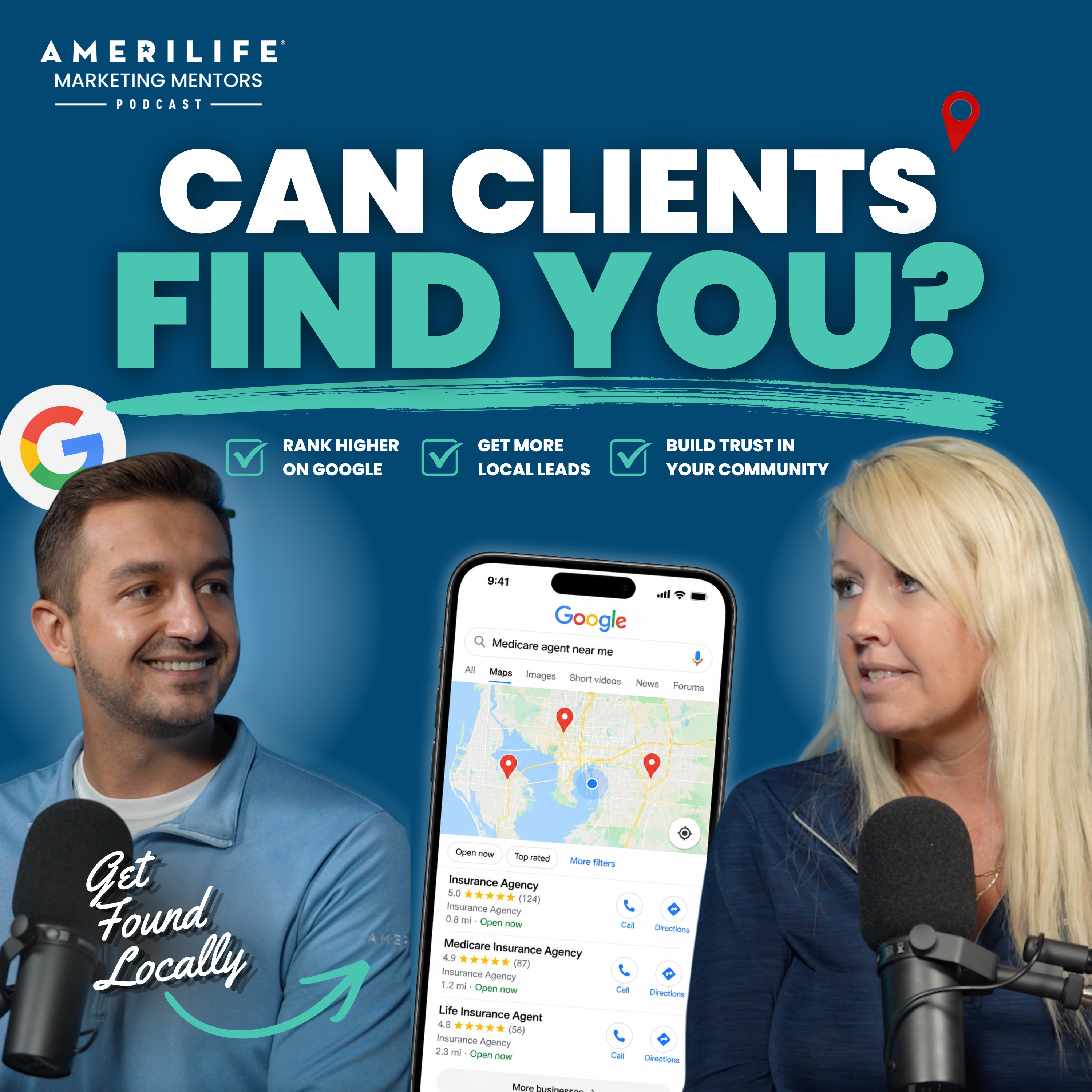
[00:06:24] Speaker B: Right. And while we're speaking about algorithms, it's not just about social media, because we know Google and search engines in general have also dramatically changed in just such a short amount of time because of AI. And in my opinion, there's few platforms out there that have changed as much as Google in the last six months or so. I mean, everything from how you search to how you buy from Google to how you purchase ads on Google, it just seems like everything is getting transformed and AI is the driver behind all of it. What is your take on Google and how, how that's changed consumer behavior?
[00:07:03] Speaker A: Google has implemented AI, as you mentioned, across all of its, its audiences. So you have the consumer audience that has shifted in the, in what it's seeing when you come into Google with those AI overviews being front and center above Google, my business above all of that. When you get, when you're a business and you're logging into the back end of the ads platform, you're seeing AI is implemented within those platforms now. And really what it's doing is it's trying to make your life easier and it's trying to make it more efficient. And so everything that they're doing is to accommodate the target audience for that specific area. And it's going to keep going because as our behaviors continue to change, our patience levels begin to change. And so the easier it is for us and the less friction there is for us, and the faster it is, the better they're going to have it. So it's just something we're going to continue to see, and we're going to continue to see that our patience is just not what it used to be.
[00:07:52] Speaker B: While we're on the topic of consumer behavior, I do want to make sure that our audience understands why we're talking about this. Because as you just mentioned, attention spans are getting shorter. We our demand for quick content and quick rewards are, you know, that's getting shorter and that's important for our audience to understand so that they can make the appropriate optimizations and adjustments in their marketing strategy to ensure that their marketing is keeping up in the age of AI. And that means understanding these algorithms and understanding what happens to your content once you hit publish. The more and more you understand what AI is doing to consumer behavior, the more better adjustments you're able to make. Email marketing is also something that AI is impacting. Your inboxes, your deliverability rates, how people sift through emails, it's, it's become a challenge and a, a, an assist as well.
What is your take on AI when it comes to email marketing?
[00:08:46] Speaker A: It should be an assistant for us, for those that are actually doing email marketing and utilizing AI to help us on, on various different ways and anything from using the AI tools to help you with integrating. So if you're getting in leads from a Facebook platform and using those leads and using AI to integrate it into your CRM, that has your email marketing that automatically sends those emails and then based on the consumer's behavior, then decides what that next email is. It's all AI and it's all capable and it's all been out there for a while. And so I think it's just bringing to light more that AI is a part of it, but it's something that we should all be utilizing. And anytime that you catch yourself doing something manual.
It wasn't long ago that I was working with an agent who exports all of their Facebook leads into a form, like an Excel form, but then they are manually exporting that and importing it into a CRM. And I'm like, why are we doing that?
Well, not just that you're losing out on the leads because the speed to lead is super important, especially if you're working with consumers. So we mentioned it a minute ago, even waiting 10 minutes to call them back, let alone a day or two to call them back, they've already moved on to the next person to get a quote from the next person.
So we know that that five minute period from when they submit that form is critical. So if you're just exporting it to a Google sheet or to any type of Excel and then you're importing it later that time frame, if you're doing that daily, you just lost out on a majority of those leads because they've already moved on. So utilize AI, take it straight from the lead platform, straight into your CRM and get a hold of them quickly. So that speed delete is critical when it comes on behalf of our agents and advisors and I can help you streamline that entire process.
[00:10:21] Speaker B: And what I'm hearing when you say that is it's not even so much about you need to be using AI just because it exists. You need to be using AI because your competition is. Oh absolutely. And if they're the ones trimming off that much time in their week and that's much more time that they get to spend with their clients, then that's going to be their advantage. So we're truly trying to give you a leg up. And we recently did a survey of over 150 agents, and a majority of those respondents are not utilizing AI marketing yet. So that, that means that there's opportunity still, even though we are six months into the 2026 year, that you can still have a leg up on your competition.
[00:11:01] Speaker A: Yes. And that's why we're creating all these videos, is we're seeing out there that there's still a large portion that are not utilizing AI and a lot of it is that they're unsure how to utilize it, which is why we're doing everything that we're doing, creating these type of videos, doing webinars. We have an LMS that's coming out later on this year. Just to do that is to teach it and make it to where it doesn't seem so, like, complicated. We're just simplifying that whole process and that's the goal of it. But the fact that people are interested in learning more about it and they know that they need to, you know, bring it within their current workflows, that's a great sign. And I was great to see that in that report, that people are open, learning more about it.
[00:11:38] Speaker B: I wonder, and I. This is just simply that wondering. But I sometimes wonder if people are hesitant to use AI because they are looking at it as some sort of cheating or something like that. But the way I look at it is it's not cheating, it's a cheat code.
It's a shortcut to get you to point A to point B faster. And if everybody has access to that same shortcut, you're certainly not cheating. These are competitive advantages.
And when you use AI the right way, you are layering in your own experiences and your own voice and your own knowledge anyways. So if that would ever be an objection, I just want to stamp that out. Because it's here, AI is here. And those that leverage it are going to be the ones that get ahead, especially as time continues to go on.
[00:12:24] Speaker A: I think there's always that cyber. Some agents and advisors are a bit scared too.
[00:12:27] Speaker B: Sure.
[00:12:28] Speaker A: They're scared that, oh, is this going to replace me? What? You know, do you still need an agent or advisor? If this is what the systems are able to do now? And the fact is, is yes. Yeah, more than ever, like, more than ever, we need an agent and advisor to be there because the, the consumers are going to continue to use AI to help them do research and help them get to that point of contacting someone. But the fact is they still want that human in the mix, and they still want that reassurance from a person to a person. So authenticity and trust, they're going to be a major factor. So the more that you can utilize AI to make your systems work better, and then you be there as a person who either validates or redirects the consumer to the right direction. That's what the new game is.
[00:13:03] Speaker B: KPMG recently released a study on trust and AI.
54% of respondents said they still have trust issues with AI and don't trust it at all. And that's telling in terms of how you should be producing content and relying on it. But it also means you're not alone if you are hesitating with AI. Bringing it back to the top of the conversation, though, about us using AI, oftentimes when we're not even realizing it, we bring that up to, to.
To make you understand that your AI doesn't have to be intimidating. No, it's making our lives easier. It's making the tools we use easier. And the more that you use it, I think the more that you'll trust it as well.
[00:13:45] Speaker A: And if you will look at your workflows and look at the things that cause you friction or that just aggravate you that you really don't want to do anymore, there's probably an AI tool out there to assist you. So it doesn't necessarily have to be the LLMs or those large language models. Doesn't have to be an email marketing platform or an integration tool. There's probably an AI tool for what it is that you're looking for, though, and a little bit of research can probably help you find that. And if you question it and you're like, hey, there might be something here I'm missing, contact us, give us your scenario, and we'll tell you, like, hey, this could, this could possibly save you hours every single week just by implementing this one tool.
[00:14:15] Speaker B: Yeah, that's why we're here. You can find us on every social media platform. You can go to amerilife marketing mentors.com right now and book a consultation with us, and we'll get you help kickstarting AI and integrating it into your marketing. Until then, Jo, any final thoughts?
[00:14:30] Speaker A: No, I think we covered it all.
[00:14:31] Speaker B: All right, sounds good. Well, for Jo Barker, I'm David Belleville, and this is the Amerilife Marketing Mentors podcast. We'll see you next.